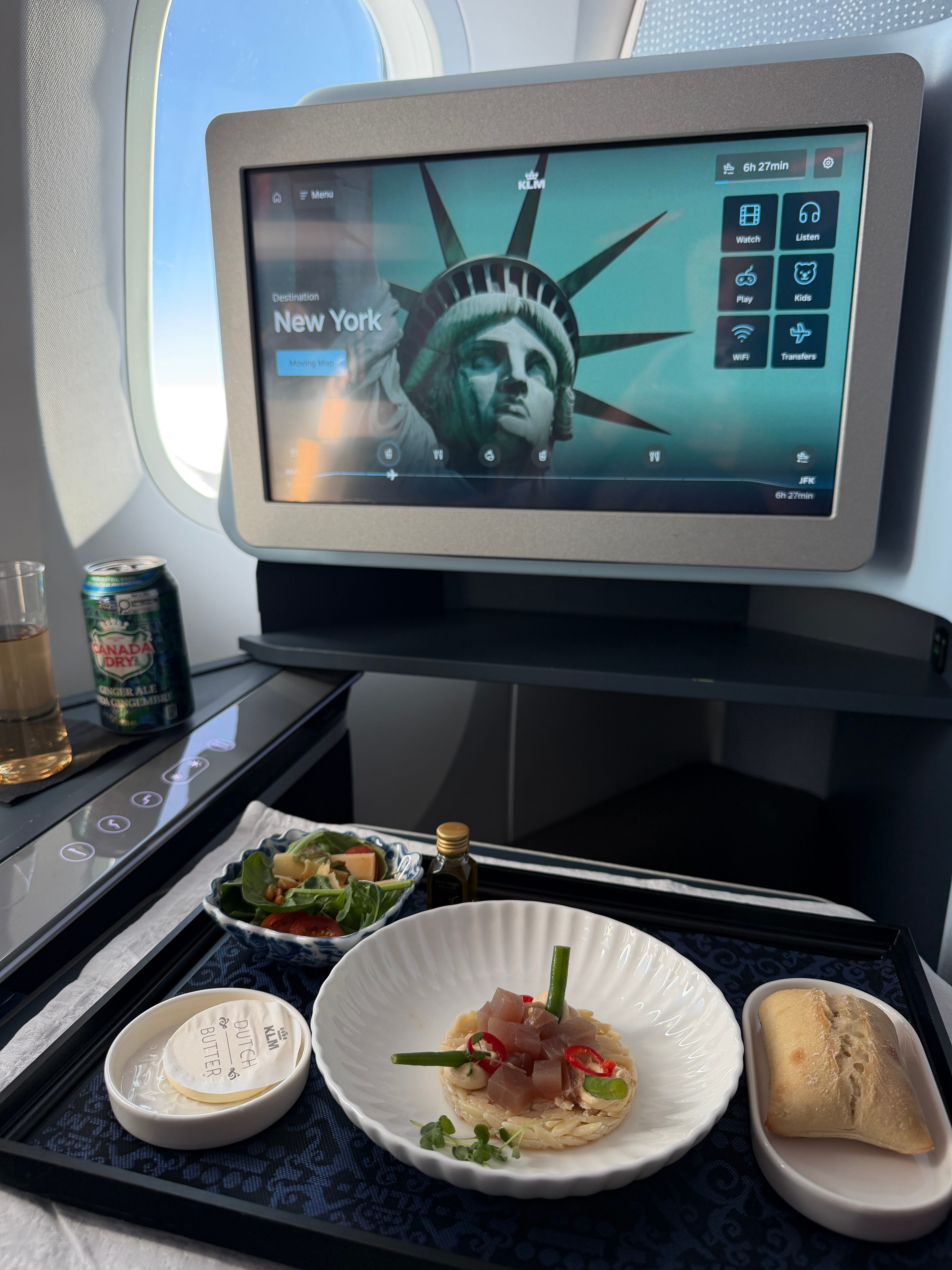
Imagine you’ve spent months looking forward to a big, milestone trip. You’ve already spent thousands of dollars or hundreds of thousands of credit card points on flying business class, only to board your flight and realize it’s nothing like you expected. Maybe your neighbor has to awkwardly climb over your seat to reach the aisle, or the seat itself looks like it hasn’t been updated for decades. When the investment is so high, you want to know exactly what you’re getting.
Flying business class is one of my favorite ways to treat myself. When you get it right, the extra space and privacy (not to mention having an actual bed!), is an indulgence I think everyone should experience at least once in their life. It’s not realistic for every trip, traveler, or budget, of course, which is exactly why the stakes feel so high when you do decide to finally splurge.
After roughly 20 business class flights across multiple airlines, the biggest lesson I’ve learned is that the words “business class” tell you surprisingly little about what you’re actually getting once onboard. Unless you know which specific details to look for, it can be frustratingly easy to book the wrong product.
Read on for:
How to decode what you’re actually buying before you hand over thousands of dollars or hard-earned points
The exact seat features that matter for privacy, sleep, and space (and the flashy airline marketing to ignore)
The three tools I rely on most to inspect cabin layouts, spot real window alignment, and find hidden award availability
My rapid-fire pre-booking checklist you can steal for your next long-haul flight


First, a reality check
It would be completely reasonable to think that booking a seat in business class would offer a pretty consistent experience across airlines. Unfortunately, that’s not usually how it works. Most major airlines operate several different aircraft types, and many still have multiple generations of business class products across their fleets. On some, you’ll find brand new suites equipped with privacy doors and massive seatback screens, while others are outdated and much less impressive.
Delta is my favorite example. Right now, they have no less than six different configurations of Delta One, and each of them varies in what it offers, so you’ll need to be savvy to make sure you’re flying on one of the better ones. This same principle applies across the industry. Even worse, airlines won’t usually clarify these kinds of differences when you’re booking. Your ticket will likely just say “business class,” even when the airline delivers multiple distinct products under that name. The most important thing to remember is that you’re choosing a specific seat on a specific type of aircraft, not just an airline and a flight.
How to know the exact business class product you’re booking
Before booking any business class flight, I want to know the answers to these three questions:
What aircraft is scheduled for my flight?
Which business class configuration is on that aircraft?
Which seat numbers are the best within that cabin?
I’ll get into the specific websites and tools I use to answer these later in the article, but it’s important to know a few things beforehand. Before you start plugging in flight numbers, you need to know which details actually make or break your experience: