


You pull out your suitcase and open it up, preparing to stuff it to the gills with everything you’ll need to become whoever you’ll be in wherever it is you’re about to go. If you’re like me, this part alone is thrilling to you: the imagination of it all, the future projection, the Tetris act of packing each item to fit just right.
But perhaps what’s most exciting is what’s waiting for us on the other side of the hotel room door: no unfinished projects, no unopened mail, no corners left to clean—only a fraction of a life demanding of our attention. Permission to turn off notifications. To be unreachable for a while. If we want it: radical stillness. Traveling gives us permission to simply exist because the environment has been curated for tranquility.
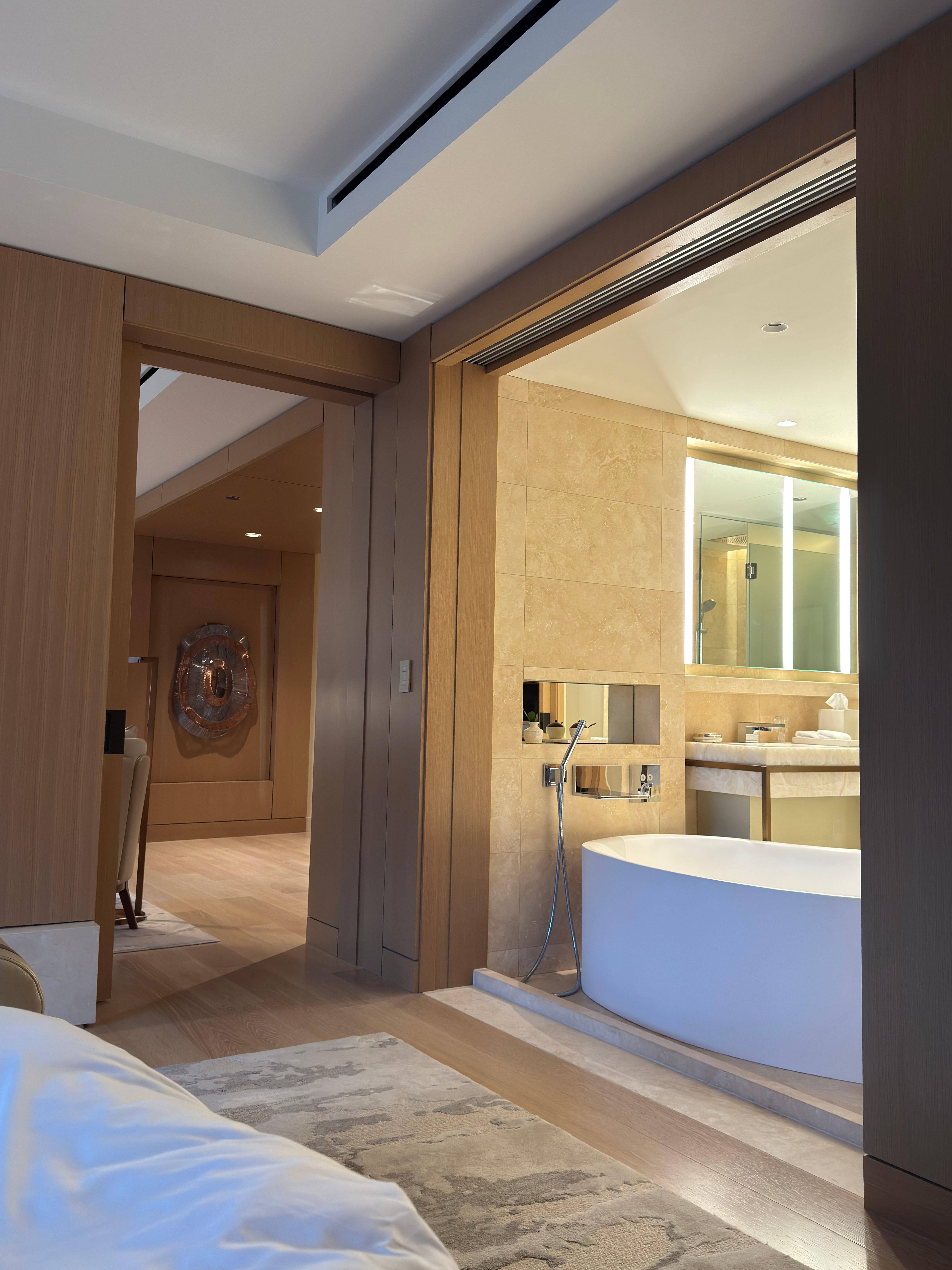
For pretty much this entire year, I’ve treated my own home as a staging ground between departures. Life continued to accumulate in small, neat piles, and each time I returned home after a trip, I’d be reminded of everything left undone, everything yet to do. Over time, this reminder became something harder to confront and easier to run from.
We tell ourselves that genuine rest requires a new latitude, a change of scenery. (Also in my case: a five-star lobby.) But I’ve found that the paradox of running away to rest is that you end up untethered—a tourist in foreign cities, yes, but also a stranger in your own life. The real luxury isn’t in leaving; it’s in building a space you don’t feel the overwhelming urge to flee from.
Deconstructing the hotel illusion
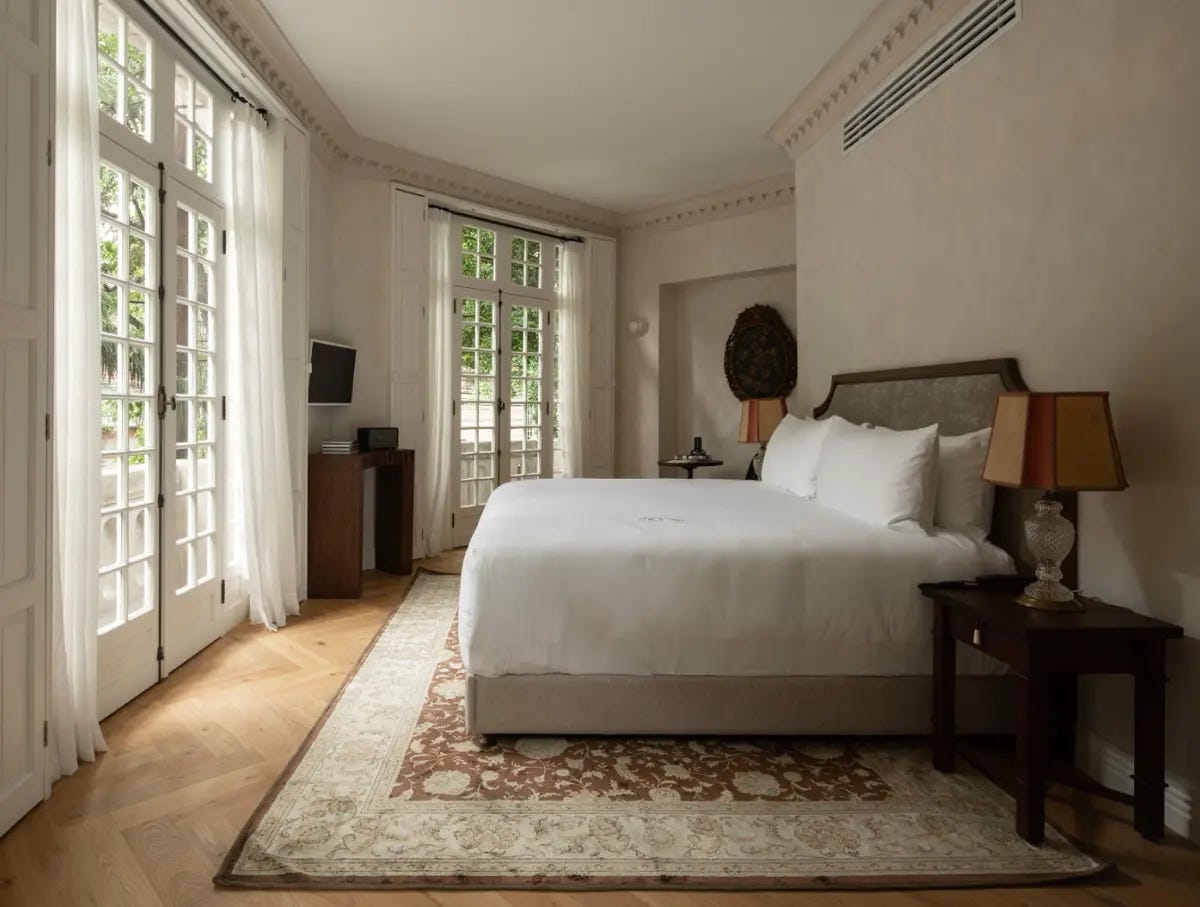
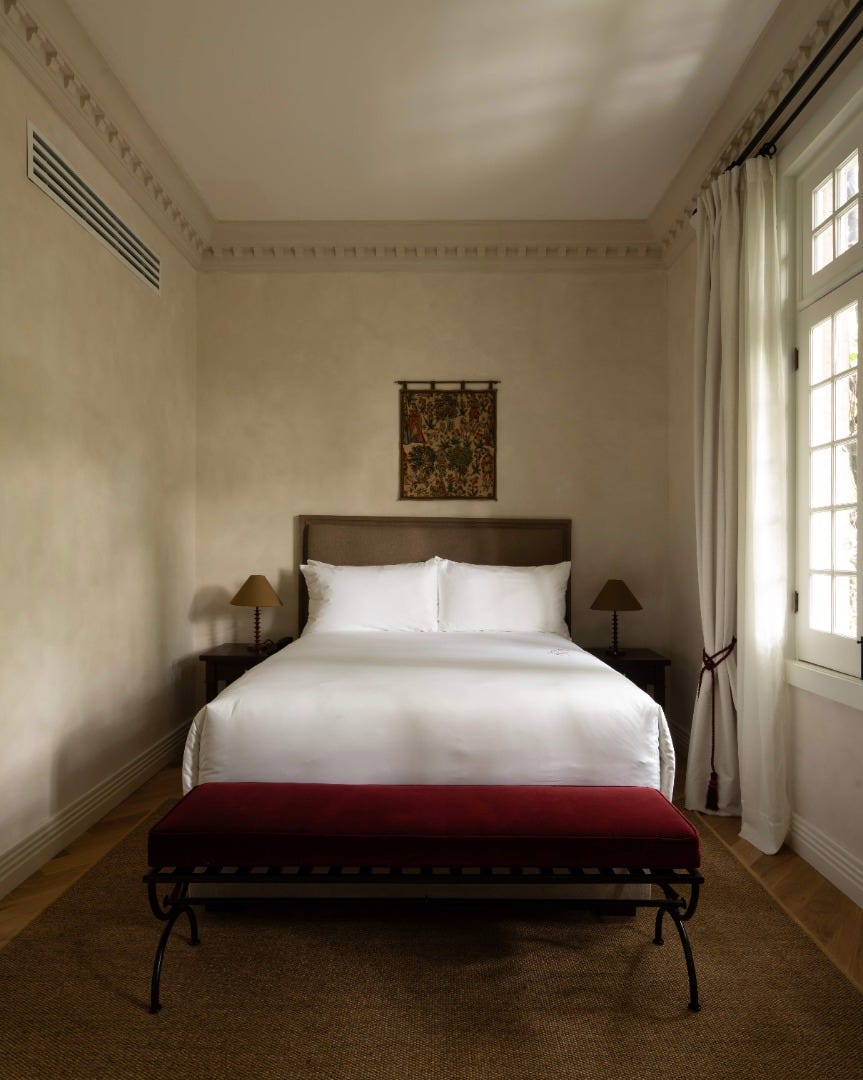
When you open your hotel room door and pass through the invisible threshold that finally flips the “vacation” switch, you might feel an involuntary, immediate urge to exhale. Something about the crisp white bedding and the orderly, everything-earns-its-place decor practically forces you to relax in a way that might feel impossible back at home.
It’s the radical absence of noise. Acoustic, mental, and visual. A hotel room demands nothing of you. The laws of your home simply do not apply here. Hell, eat dinner in bed! Leave the sheets unmade! Pile your clothes on the chair in the corner with reckless, guiltless abandon! There’s no messy history hiding in the sheets to confront, or knickknacks of past lives lining the shelves staring ominously back at you. Just a blank canvas upon which you can project. It offers us something home rarely does: pure, unearned permission to just be.
The illusion, however, is believing that this state of mind requires a key card and a nightly rate. That peace and permission are geographical locations to be found rather than environments we can engineer for ourselves. So the question becomes: why do we fight so hard to buy tranquility on vacation only to abandon the right to it the moment we unlock our front door?
The reclamation
Following the implosion of my ten-year relationship (all while navigating my recent transition from corporate to freelance life), I moved into a space that was mine and mine alone for the first time in my life. Up until now, the concept of home had always meant a shared canvas. A blend of mutual compromise and the weight of cumulative history.
Picking up the keys to the first apartment I’d ever live alone in was both thrilling and disorienting. In a room that felt at once both impossibly quiet and vast, I reflected on my current circumstances, my love of travel, and the urge to escape my own life—and realized for the first time how all of it might just be interconnected. I was navigating a period of profound destabilization. Of course I wanted to run! I desperately needed a space that didn't reflect back to me the grief of who I used to be or the weight of what I was trying to rebuild.
The center of gravity
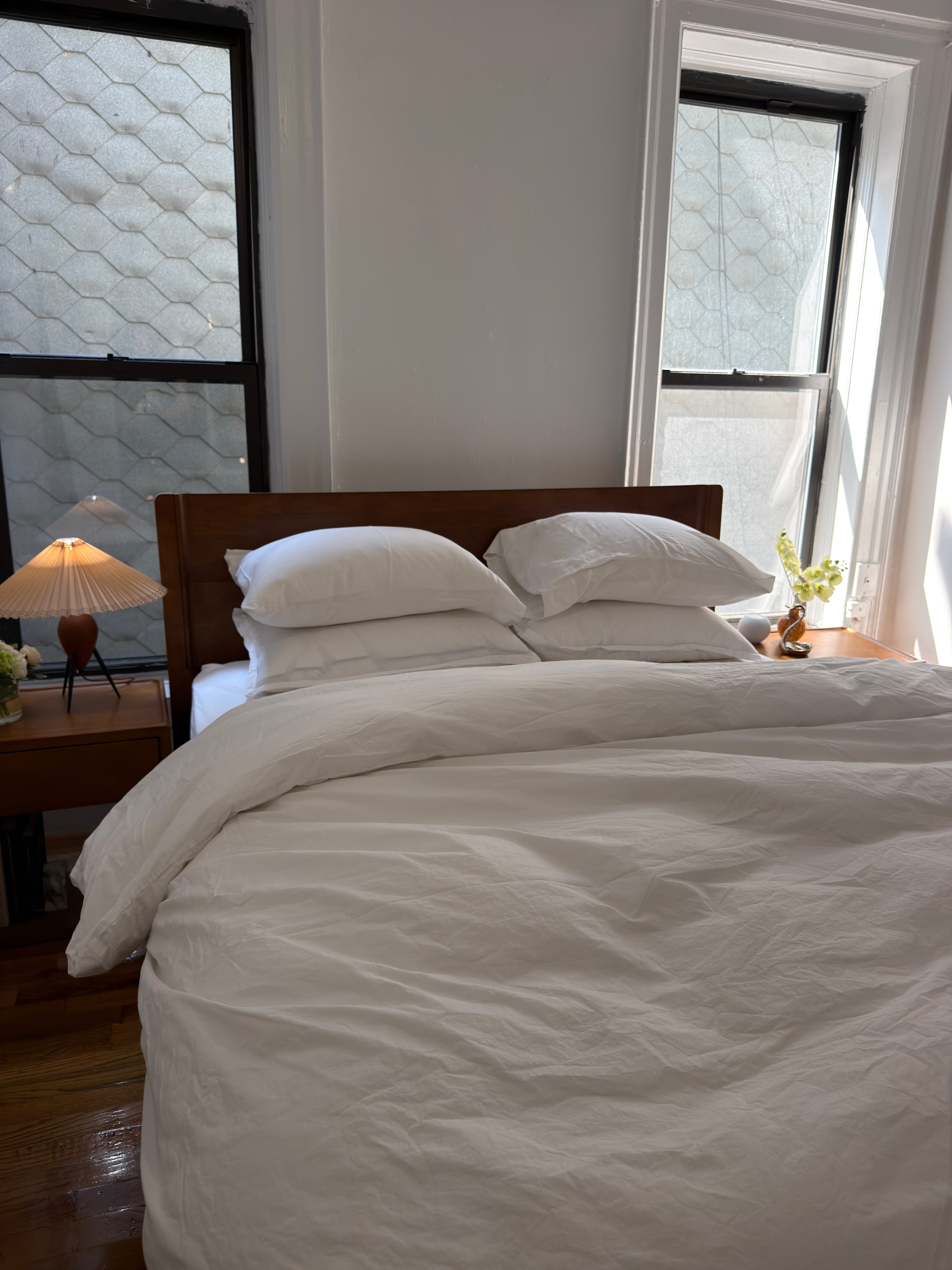
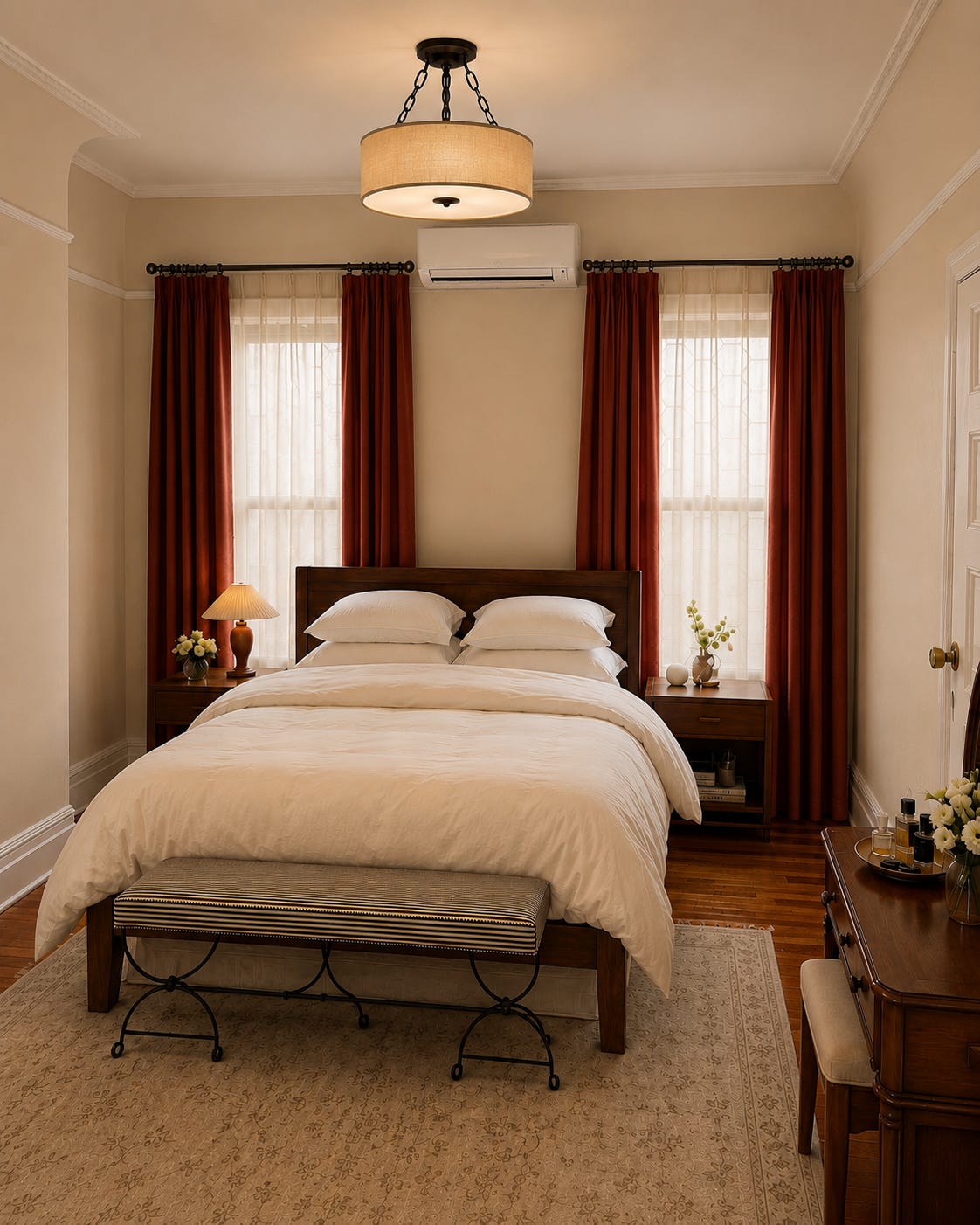
If a hotel room is a sanctuary engineered for rest, the bed is the undeniable centerpiece. It is where design directly impacts human recovery, serving as the physical anchor for the entire room. In rebuilding my own space, I knew that if I wanted my own home to restore me in the way a 5-star stay does, I had to start with where rest is felt most deeply, approaching my bedroom with the same design discipline as the boutique hoteliers I travel the world to find.
That meant stepping away from piecemeal furniture and approaching the bedroom as a complete system. With this in mind, I chose to anchor the room with designs by Thuma, opting for a unified setup comprised of their classic bed, (along with the mattress and cotton percale bedding) flanked by two matching nightstands. The wood tones of the furniture feel grounding in a way that delights my Taurus sensibilities, while the crisp percale bedding is exactly what I was going for in trying to recreate that elusive ultra-fluffy texture I previously thought you could only find in a hotel.
More than just a place to sleep, the system has become the room’s center of gravity. Sliding into a bed built for pure sanctuary turns the end of the day into a quiet ceremony. A nightly physical reminder that everything I used to travel miles to find is finally right here.
The ritual of returning home
The point is: you don’t have to travel thousands of miles to find luxury. You don’t have to book a hotel room somewhere just to feel like your peace is worth being guarded.
I still love the thrill of departure, but I know now that the true measure of a well-designed life is how it feels when the trip comes to an end. Passing through the threshold of your front door and feeling that same involuntary, immediate urge to exhale as the hotels you used to escape to.
I no longer travel to escape my life. I travel simply to see the world, knowing the most luxurious destination is the one waiting for me right where I left it.
This post contains affiliate links, which means I may earn a commission if you make a purchase (at no cost to you).
Window Seat covers the intersection of luxury hospitality, aviation innovation, and the culture of modern travel, written by Tori Simokov, a writer and designer based in New York. For partnership opportunities: tori@v1projects.com. You can also connect with her on Instagram, TikTok, or ShopMy.
Beautifully written! The contradiction, the ache and the hope is all real.