


When you land in a new city, how do you begin to understand it? For me, food has always been the most intuitive entry point. I typically do the work myself: research obsessively, cross-reference local favorites with tourist standouts, and build a can’t-miss hit list with a lot of variety.
It never really occurred to me that there might be an easier way.
Enter: food tours. I used to think they were just for first-time travelers or mega tourists; the kind of thing you book when you don’t do any research or when you want someone else to plan your day for you. I’m meticulous about planning, especially when it comes to food, so they never made the cut.
But when I was invited to join a walking food tour with Devour Tours in Lisbon, I quickly realized I had misunderstood the point entirely. Instead of checking off dishes or eating your way through a neighborhood, a truly great food tour is about learning how a city works—socially and culturally—through the lens of how and where people eat.
Food as a shortcut to context
Foreign cities can be overwhelming when you first arrive. You’re dropped into unfamiliar customs and rhythms, unsure which side of the sidewalk you should stay on or if it’s kosher to jaywalk. You might spend an inordinate amount of time looking for a trash can, or have a surprisingly easy time finding a public restroom.
But food cuts through all that. Where people go, how long they linger, what time they eat, what’s considered indulgent versus everyday…all of it tells a story. Even when menu items feel unfamiliar or impossible to pronounce, the rituals around eating are immediately legible.
In Lisbon, my food tour ducked into unassuming neighborhood spots I wouldn’t have given a second glance. Places where locals stop for a quick glass of wine after work or gather over petiscos that look simple but carry generations of tradition. Along the way, our guide explained not just what we were eating, but why it mattered: how certain dishes evolved, how dining habits reflect Portugal’s history, and how to spot the difference between a place designed for tourists and one designed for locals.
Which tour to choose
What sets Devour apart is the intention and care built into every experience. There is no performative storytelling or gimmicky stops. Instead, the tour feels like being shown around by a friend who happens to be a local, which, in many ways, is exactly what it is.
The pacing is thoughtful. Each stop feels purposeful. You’re not just tasting food. It’s about more than that. The emphasis is on learning how to navigate a place with more confidence and nuance.
Lisbon happened to be my entry point, but this approach is consistent across Devour’s destinations. Whether you’re in a city you’ve never visited or one you think you already know, the value is the same: you come away more informed and better equipped to explore on your own.
Learning Lisbon through its food
Devour’s Taste and Tradition tour distills Lisbon into one single, very delicious afternoon. I worried the tour might feel overly historical or fact-heavy, more like a walking lecture than an experience. Instead, it was an unexpectedly natural way to contextualize the city. The history never felt academic; instead, it was so expertly woven into what we were eating and where we were standing that, by the end, Lisbon felt familiar rather than foreign, which is exactly what I was hoping for.
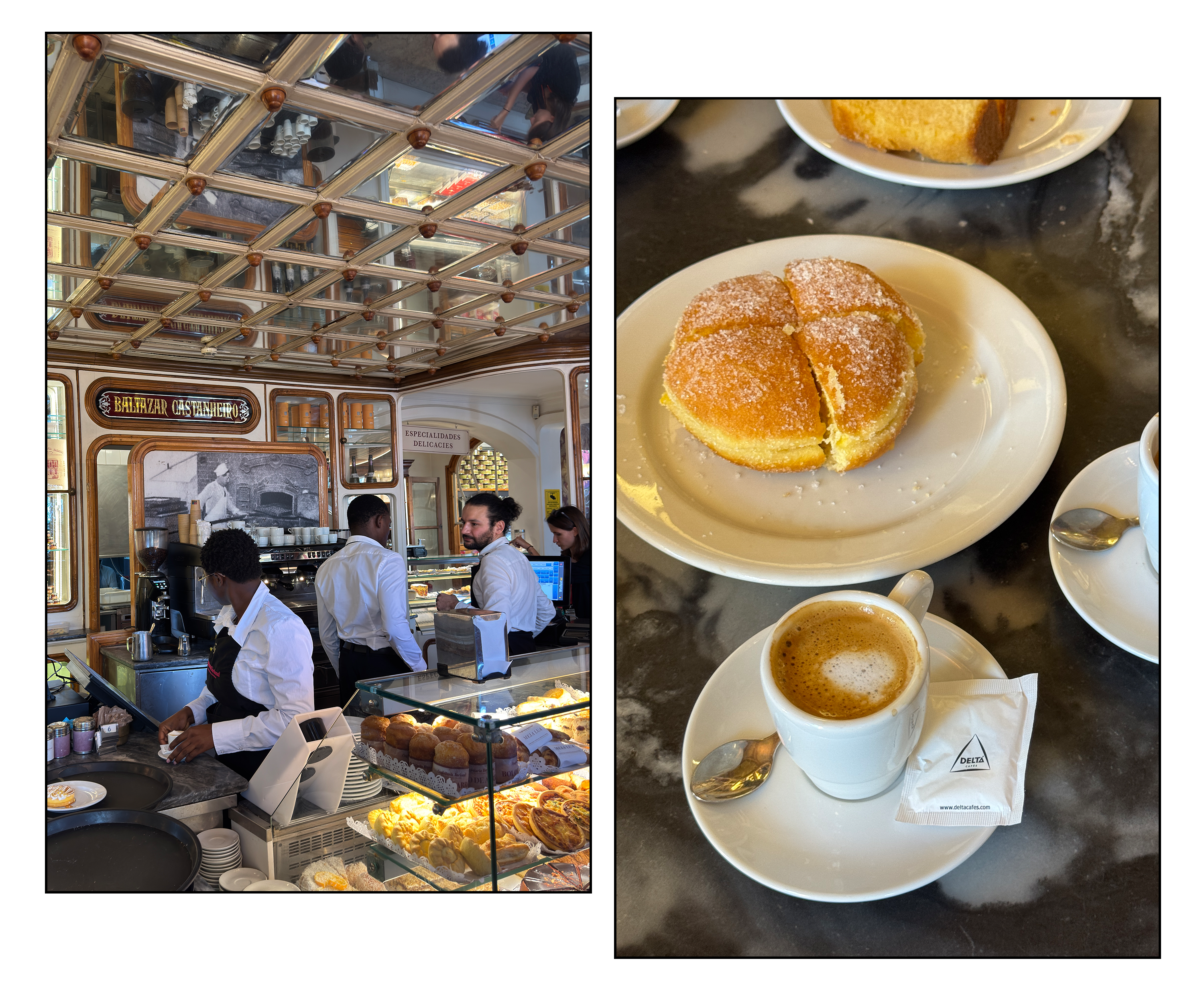
Our first stop was pastries and coffee, where we learned how to order like a local and why coffee culture here is fast and unfussy. From there, the iconic bifana: a pork sandwich dressed with a house mustard made from beer and sugar, finished with peri peri if you like heat. The bread arrives fresh daily from a nearby bakery, and they ask you not to name the stop to keep it under the radar (you have to take the tour to learn it!).
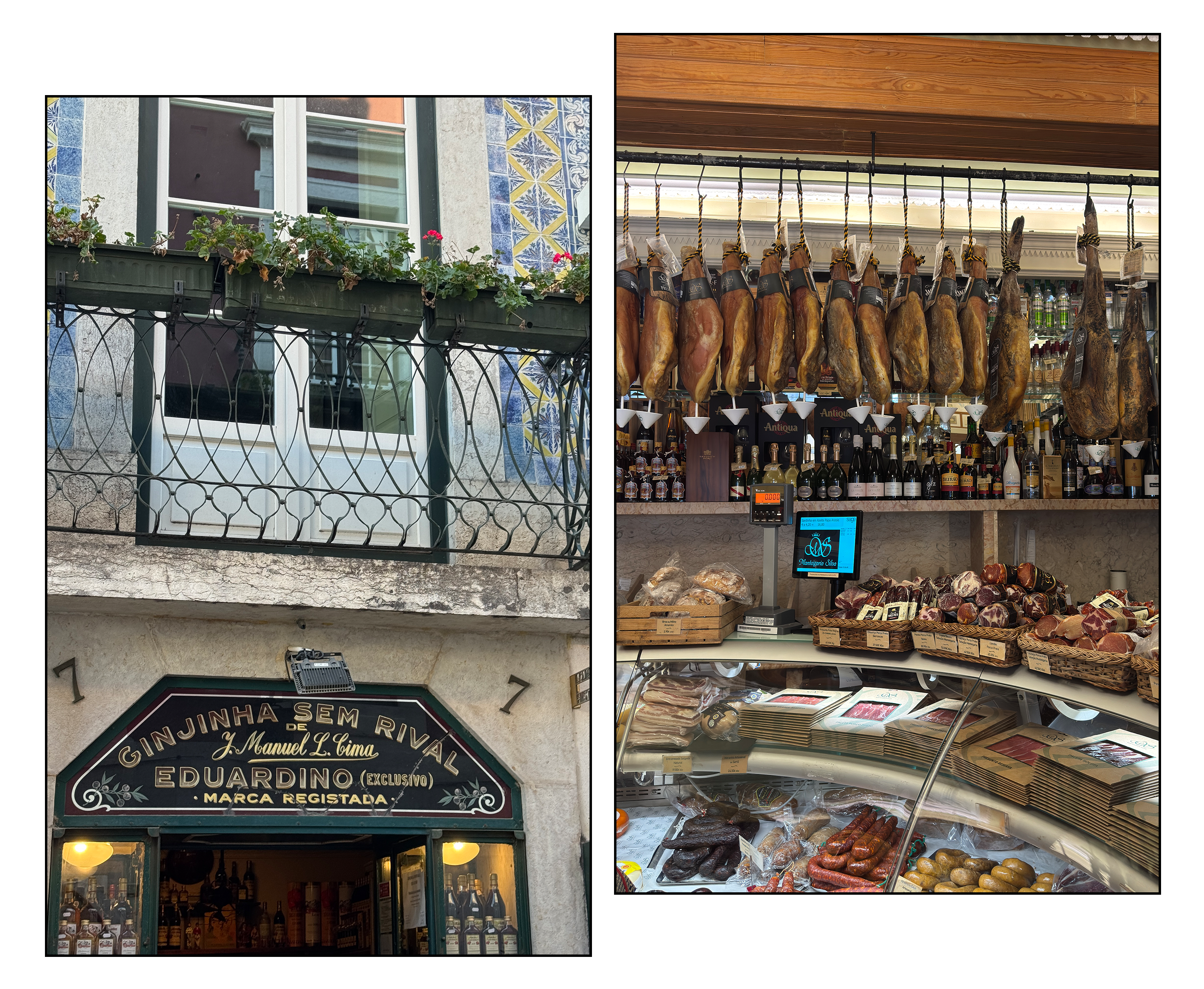
Presunto followed, Portugal’s answer to jamon, made from black Iberian pigs on an acorn diet, best paired with cured sheep’s cheese and port.
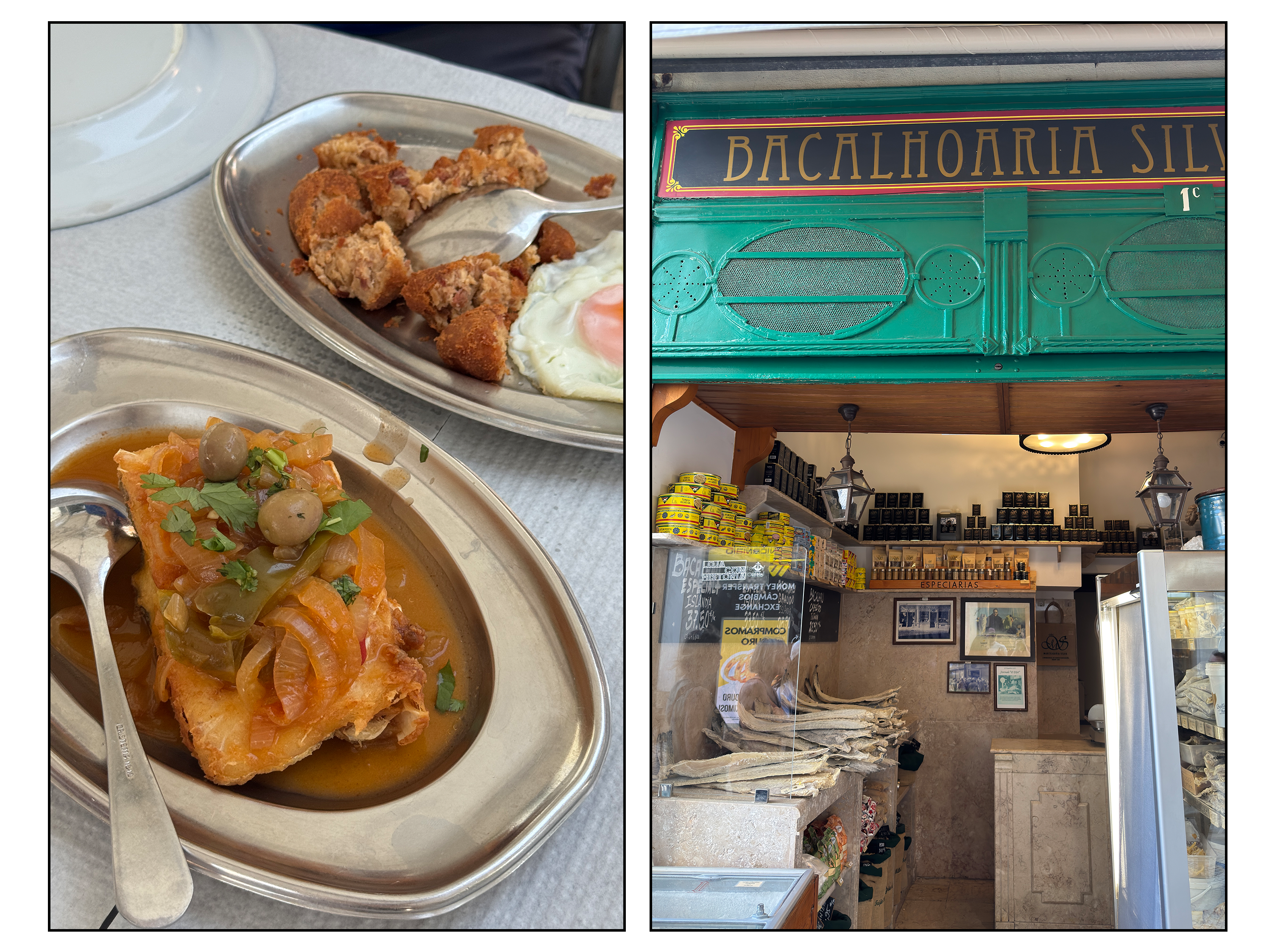
Next we sipped ginjinha, a sour cherry liqueur that began as medicine, before ending in a tasca—the kind of family-owned restaurant you pick once and return to forever. There was vinho verde (light, slightly sparkling), classic dishes like bacalhau and seafood rice, and a lesson in how wine here belongs to everyday life.
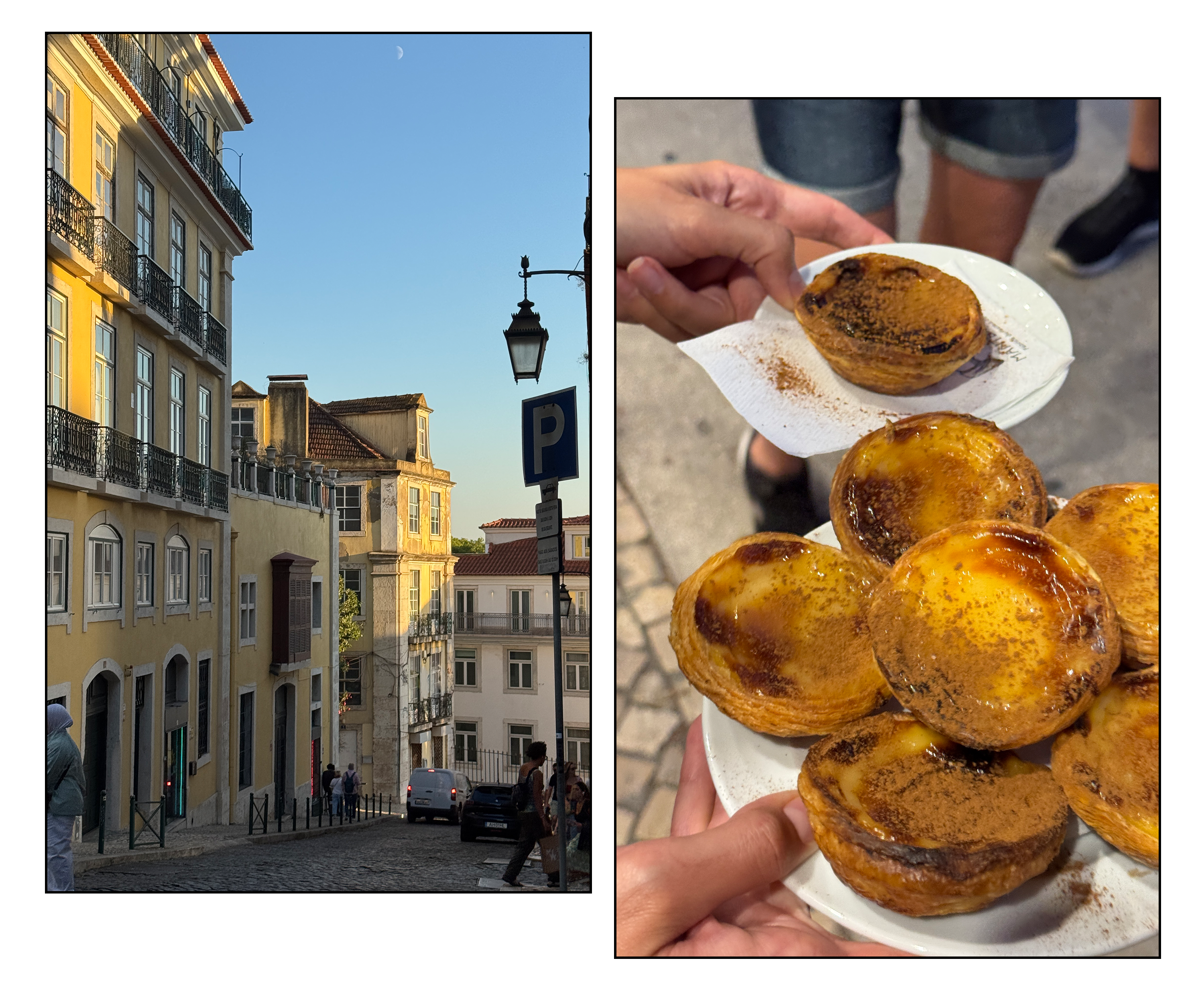
The final stop was dessert, which of course was pastel de nata. I had already tried a few on my own the days leading up to the tour, but it was here I learned they are actually best eaten covered with cinnamon, and solidified Manteigaria as the #1 spot coming closest to the original Belem-style ideal.
Along the way, I learned you can drink in the streets, which trams to take instead of the crowded 28, and to look for the Loja com Historia sign as a mark of cultural significance. In just a few hours, Lisbon stopped feeling foreign, and that, my friends, is the whole point.
How I would do it again
Lisbon taught me that the fastest way to understand a new city is not through museums or monuments, but through the everyday rituals that locals take for granted. Eating like a local isn’t just about what’s on your plate, it’s about learning how to belong, even temporarily, in a place that is new to you.
And sometimes, all it takes is one afternoon to make a city feel like your own.
Today’s newsletter is graciously sponsored by Devour Tours.
Tori Simokov is a Travel Writer and Graphic Designer/Strategist based in New York. To get in touch, email tori@v1projects.com. Want more? Check out Instagram, TikTok, or shop her curated favorites.
Agree with this! I now tend to book a food tour early in a trip. Helps me get the lay of the land, gives me a day where I don’t have to make decisions when I’m jet lagged, and I have gotten the best recs for meals from my tour guides!
I'm going to Lisbon in a few weeks!!