


This is Window Shopping, a weekly briefing from Window Seat. Every issue covers essential news in luxury travel, spotlights one exceptional hotel, and shares personal updates or recent product discoveries.

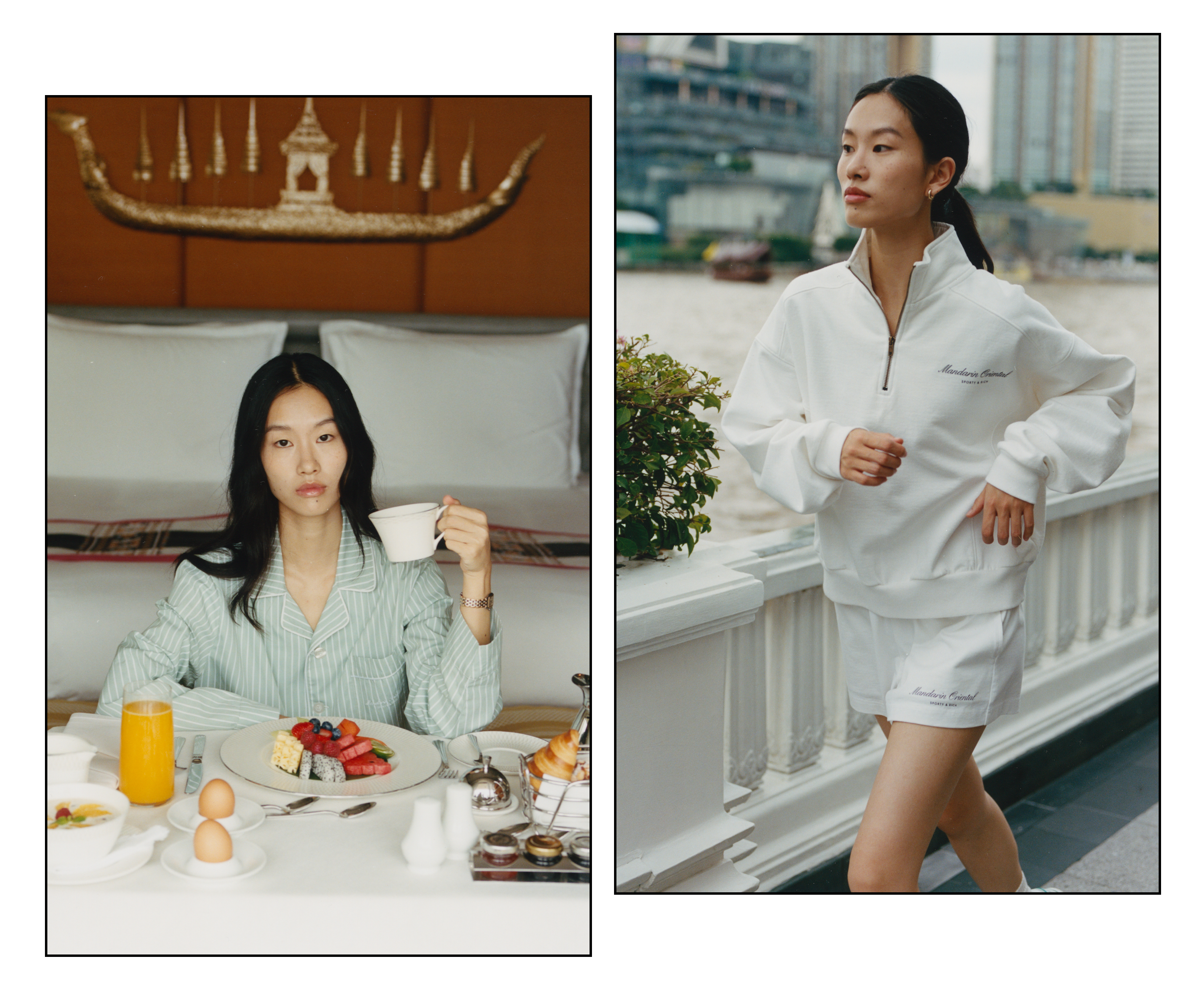
Sporty & Rich continues their hotel partnerships, this time with Mandarin Oriental Bangkok to mark the hotel’s 150th anniversary with a limited-edition wellness-inspired capsule. The collection spans co-branded crewnecks, tees, pajamas, totes, and caps in Mandarin Oriental’s signature celadon hue, which is a first for Sporty & Rich and a nod to the property’s Thai heritage. Available in March with worldwide shipping. I’ll take one of everything, thanks!
The Cayman Islands Department of Tourism is opening applications for its first-ever Chief Relaxation Officer: a two-week, fully hosted role designed to reward radical rest. The chosen traveler will island-hop between Grand Cayman and Cayman Brac, with the official job requirements including eight hours of sleep nightly, daily time by the water, tech-free sunsets on Seven Mile Beach, and meals with locals to learn Caymanian relaxation rituals. Applications are open now through 2/17, with candidates submitting their worst vacation stories for a chance to finally vacay properly. Best job ever???
Thompson Hotels announced a year-long partnership with BERO, the premium alcohol-free beer founded by Tom Holland. Rolling out across Thompson properties nationwide, the collaboration positions BERO as the hotel’s non-alcoholic beer of choice, seamlessly integrated from check-in moments to cultural programming tied to wellness travel and social rituals that don’t revolve around drinking (love to see it).

By the time you’re reading this, I’ll have moved into my new apartment! I know in a recent letter I said I’d be downsizing from a two-bedroom to a studio, but in a truly wild turn of events, I ended up finding another two-bedroom in my budget (and basically in the same neighborhood I lived in before!). So here’s the upside: I don’t actually have to part with as much as I expected. The downside, though? I suddenly have a lot more space to be intentional about.
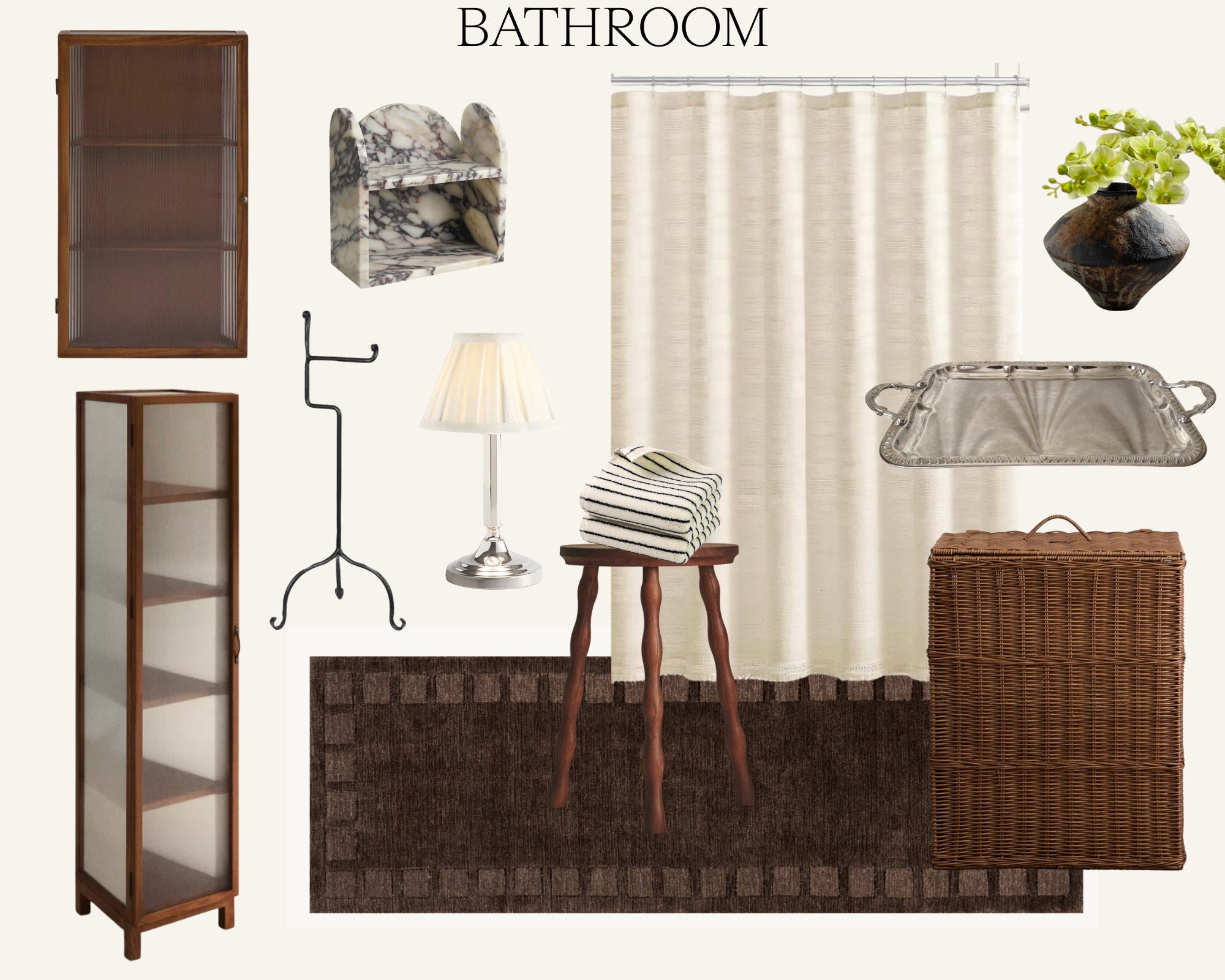
Case in point: my bathroom is enormous. Which is a gift! But also a design responsibility. Rather than treating it like a purely functional space, I’m approaching it the way great hotels do: as a room in its own right. One that balances storage, atmosphere, and small moments of luxury that elevate your daily routines. Here’s how I am thinking about achieving that five-star hotel feeling, starting with a few key pieces:
A stool that signals leisure, not necessity. One of my favorite hotel tells is the presence of a stool or small bench that exists purely to slow you down. It’s not there because you need it, it’s there just becuase. A sculptural wooden stool with folded towels or a robe instantly reframes the space from “getting ready” to “taking your time.” It is the difference between a bathroom you pass through and one you inhabit.
Soft lighting where you least expect it. A small lamp in a bathroom is one of the fastest ways to achieve hotel energy. It lowers the emotional temperature of the room, making it feel warmer and more intimate, especially at night. Hotels understand that overhead lighting is for function, but ambient lighting is for mood.
Textiles that ground the space. A rug is non-negotiable for me. A dark, textured rug adds contrast and warmth, instantly making the space feel more like a suite than a standard bathroom.
Closed storage that hides the mess: Wicker or woven storage is a hotel classic for a reason. It conceals the unglamorous stuff—backup products, extra paper goods, cleaning supplies—while still adding texture and visual interest. A lidded basket keeps the visual field calm, which is key. Luxury bathrooms never show everything at once; they curate what’s visible and swiftly tuck the rest away.

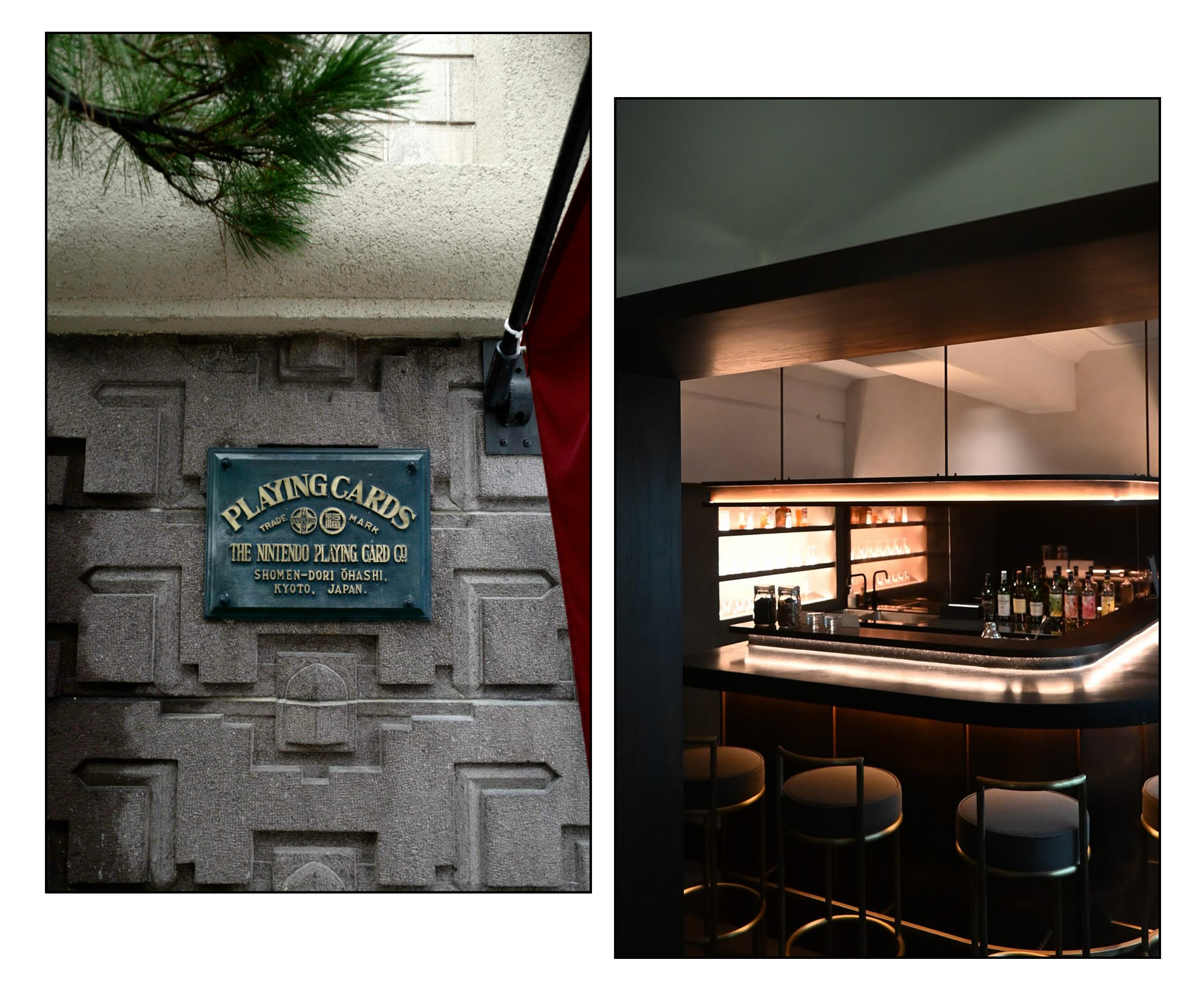
Kyoto Marufukuro— Kyoto, Japan
If you’re as big of a Nintendo stan as me, this hotel hits on a deeper level. Part of Marufukuro’s lore is that it occupies a former Nintendo headquarters in Kyoto, dating back to when the company was producing playing cards (long before the consoles or characters they are beloved for today). Designed by Tadao Ando, the 18-room hotel is intentionally restrained, letting history surface in small, meaningful ways rather than turning it into spectacle. Original Showa-era details remain—signage, the green-tiled roof, even the old cage elevator—but the emotional center is the hotel library, where guests can see rare Nintendo relics and archival materials up close. It’s not a museum so much as a quiet moment of reverence, a reminder that this global phenomenon started in rooms like these. For fans, it feels less like a stay and more like a pilgrimage.
This post contains affiliate links, which means I may earn a commission if you make a purchase (at no cost to you).
Window Seat covers the intersection of luxury hospitality, aviation innovation, and the culture of modern travel, written by Tori Simokov, a writer and designer based in New York. For partnership opportunities: tori@v1projects.com. You can also connect with her on Instagram, TikTok, or ShopMy.
I stayed at the Marufukuro bc I’m a huge Nintendo fan. It really is so special and they also took great care of me food wise with my gluten allergy.